


Be an ambassador for safe water.
Access to safe drinking water is essential for preventing cholera, typhoid, and other waterborne diseases. In many Tanzanian communities, families collect water from lakes, rivers, wells, and public water systems that may be contaminated.
Health & Hope Foundation trains students and community leaders in Mwanza and Maasai communities to test water sources, recognize contamination risks, and practice safe water treatment and storage. We provide testing supplies and practical education so local participants can continue monitoring water safety throughout the year.
Our goal is to empower communities to identify unsafe water, report leaking pipes, and take action to protect their families and neighbors.
-
 Water Collection
Water sample is collected from the source.
-
 Pipette water sample onto Petrifilm
Sample pipetted onto Petrifilm for bacterial colony count.
-
 IDEXX ColiertTest
24-hour Coliert test tube results. Control test is clear. Local water sample is yellow, showing dangerous E. Coli levels.
Community Water Leaders: Turning Knowledge into Action
In Mwanza and the Ngorongoro region, Health & Hope Foundation trains local community leaders to test water sources and recognize contamination risks. Maasai community leaders and Mwanza women's business groups are putting these skills into practice by monitoring local water sources and helping their neighbors stay safe.
In Mwanza, women have created signs identifying safe and unsafe water sources. They also bring health education directly into their communities—visiting markets, churches, and neighborhoods, sometimes using megaphones to reach more families.
During rainy seasons, when the risk of waterborne disease increases, these women teach families how to prevent cholera, recognize warning signs, begin oral rehydration promptly, and seek medical treatment without delay.
The greatest success is seeing local people become the educators and protectors of their own communities.
From Maasai leaders testing springs, rivers, and village taps to Mwanza women identifying and placing signs on safe and unsafe water sites, as well as spreading education for cholera prevention, local communities are taking the lead in protecting their water and their health.
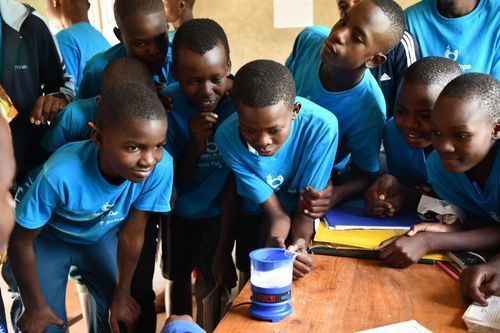
Point-of-Use Chlorination
The MSR SE200 system uses water, salt, and electricity to produce a chlorine solution for disinfecting drinking water.
Although this equipment is no longer manufactured, HHF maintains two systems, including one in Nainokanoka, as an alternative to boiling water. The systems also provide opportunities for practical education about water treatment and safe handling.